
Energy & Sustainability Management For Retail & Franchises
An all-in-one software system that helps retailers and franchise networks simplify energy and sustainability management, reduce utility costs and carbon emissions, and improve performance across every location.
Get started today with a Free Trial.
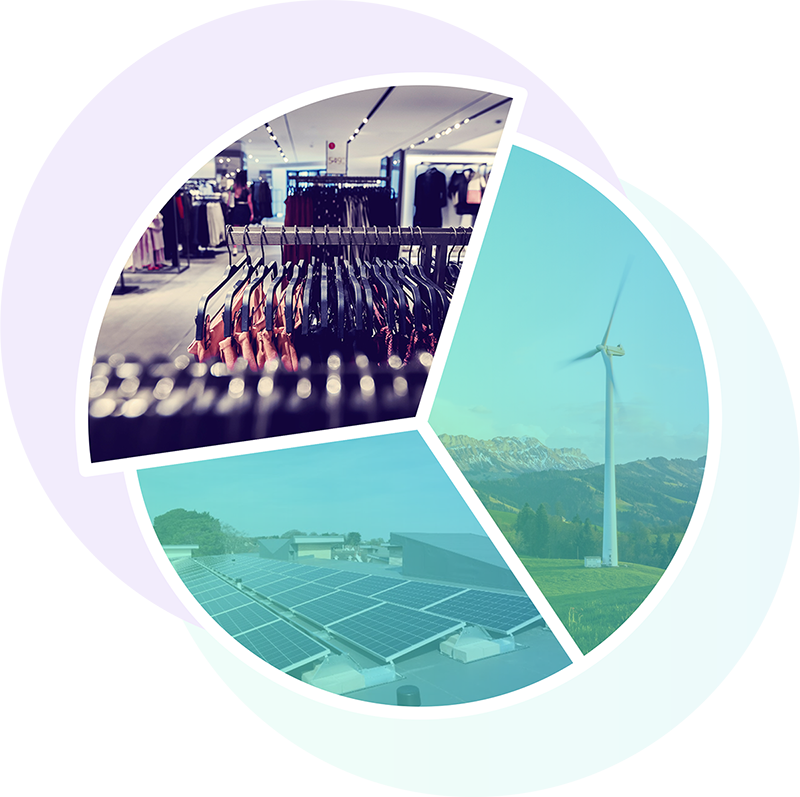
Trusted By Retail & Franchise Networks Focused On Better Energy And Sustainability Performance



How Is Energy Used In Retail & Franchise Networks?
From individual stores and supermarkets to nationwide or international retail chains and franchise networks, managing energy efficiently can have a direct impact on operating costs, carbon emissions, and overall sustainability performance.
Retail businesses can have very different energy profiles depending on their format, size, location, opening hours, and the equipment they operate.
Clothing and general merchandise stores, for example, may have significant lighting, heating, and cooling requirements, while supermarkets, convenience stores, and food retailers must also account for energy-intensive refrigeration and food-service equipment.

Other retail and franchise formats, including beauty, cosmetics, footwear, homeware, department stores, discount retailers, charity shops, and medical outlets, can have their own distinct energy-use patterns depending on how each site operates.
For retailers and franchise groups managing multiple properties, consistent energy data provides a foundation for comparing building performance, identifying inefficient sites, and prioritizing investment across the portfolio.
This is becoming increasingly important as energy performance requirements for commercial buildings continue to evolve. In Europe, the revised Energy Performance of Buildings Directive (EPBD) entered into force in 2024, with the broader aim of improving energy performance and accelerating decarbonization of the EU’s non-residential building stock.
Data from the U.S. Energy Information Administration’s (EIA) 2018 Commercial Buildings Energy Consumption Survey (CBECS) illustrates the scale and diversity of the sector. It estimated approximately 350,000 non-mall retail buildings and a further 167,000 enclosed and strip malls around the country. Food sales accounted for another 163,000 commercial buildings.
The EIA identifies major commercial-building energy uses including space heating, cooling, ventilation, lighting, refrigeration, cooking, and water heating. Its methodology takes account of factors such as building size, building type, operating hours, equipment efficiency, and climate – all factors that can cause energy performance to vary significantly between retail locations.
For multi-site retailers and franchise networks, this creates an additional challenge. Energy and sustainability teams may need to understand performance across tens, hundreds, or even thousands of locations, potentially involving different store formats, operating hours, suppliers, tariffs, meters, and geographic regions.
Understanding where, when, and how energy is being consumed across the network provides the foundation for identifying inefficient locations, prioritizing improvements, and measuring whether those improvements are working.
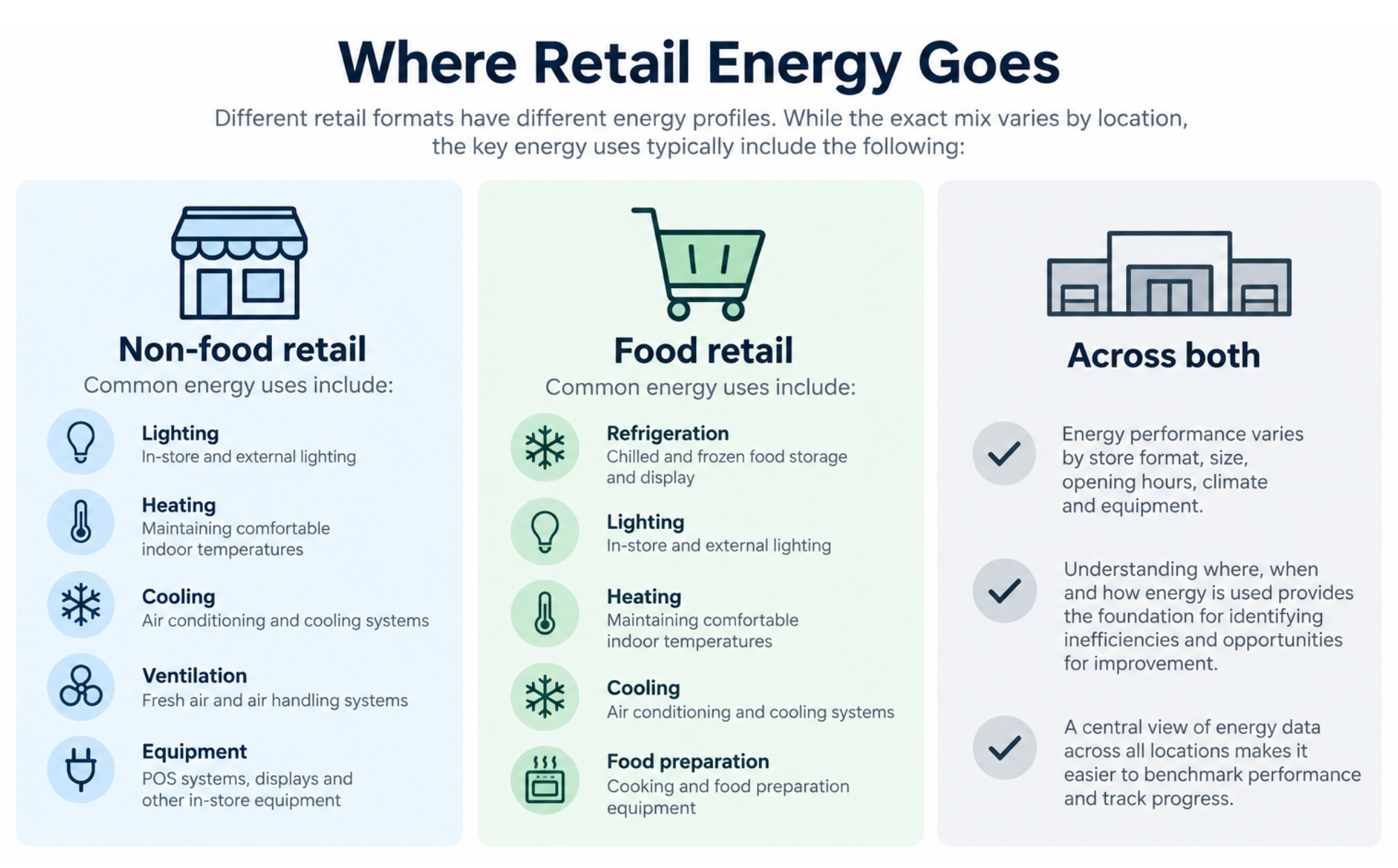
Source: U.S. EIA, 2018 CBECS. Actual energy profiles vary by store format, size, opening hours, climate, and equipment.
What are Retailers Saying?
View case study“We wanted a simple-to-use tool with a strong analytical output, and we got that and more. The team is patient and informative. We were impressed from the outset.”
How Does EnergyElephant Help Retail & Franchises?
Retailers and franchise networks generate large volumes of energy, waste, water, and other sustainability data across stores, offices, warehouses, and distribution facilities. When this information is spread across supplier portals, utility bills, spreadsheets, and separate systems, getting a clear view of performance can become difficult and time-consuming.
EnergyElephant brings this information together into one central, searchable, and secure platform, giving Energy, Finance, Operations, and Sustainability teams a consistent view of consumption, costs, and carbon emissions across individual locations and the wider organization.
Retail customers use EnergyElephant across their multiple stores and distribution and support centers, with data collected from dozens of meter points. The platform automatically imports, verifies, and analyzes new utility bills, while dashboards allow users to drill down into individual locations.
By working with Energy and Sustainability teams across multi-site organizations, we have developed services designed to simplify energy, carbon, and sustainability management across portfolios at different scales
One Source Of Truth Across Every Store & Location
Managing a distributed retail estate can mean dealing with different energy suppliers, meter points, billing formats, and data sources across multiple locations.
EnergyElephant centralizes electricity, gas, water and other utility data so teams can analyze their organization from portfolio level right down to an individual store or meter.
Instead of manually consolidating spreadsheets and supplier data, decision-makers can use easy-to-understand dashboards to review consumption, costs, and environmental performance in one place.

Different levels of access can also be provided to different users. Store-level users can access dashboards specific to their own energy consumption, while HQ can track the impact of sustainability improvement projects across individual stores.
For retail and franchise organizations, this can provide the visibility needed to create greater accountability at location level while maintaining consistent oversight centrally.
Benchmark Stores & Identify Energy-Saving Opportunities
When you operate multiple locations, your own portfolio can become a valuable source of insight.
EnergyElephant visualizes energy consumption to help identify inefficiencies and problematic trends. Organizations can assess buildings and divisions against custom KPIs such as floor area, staffing, or activity, making it easier to compare relative efficiency across a portfolio.
For retailers and franchises, this can help teams identify which locations are consuming more energy than comparable sites, investigate out-of-hours consumption and unusually high baseloads, and prioritize stores with the greatest potential for improvement.

Detailed interval data from smart meters and IoT devices can provide an even clearer picture, helping teams move beyond monthly utility bills to understand when energy is actually being consumed.
Instead of treating every location in the same way, teams can focus their time and investment where the data indicates the greatest opportunity.
Automate Utility Bills, Validation, & Cost Management
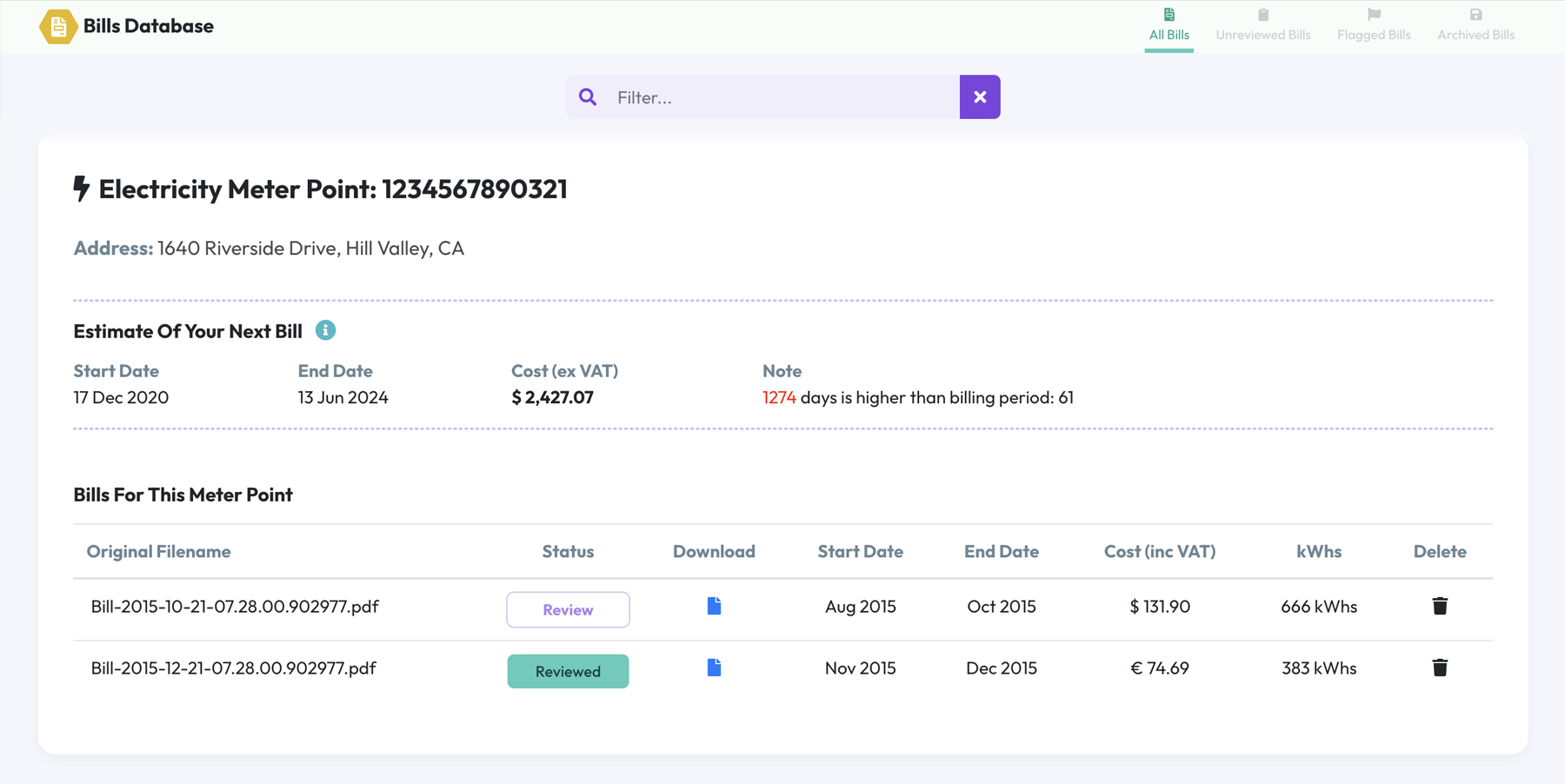
Processing utility bills manually across a large network of stores can consume significant staff time and make billing anomalies harder to identify.
EnergyElephant can automatically retrieve bills from utility suppliers, store the original documents, and extract detailed billing data. This simplifies bill checking and data capture, allowing teams to focus their attention on bills and accounts that require review.
Simplify Carbon Accounting & Sustainability Reporting
For retailers and franchise networks, operational energy can be only one part of the carbon picture.
Retail value chains can encompass purchased goods and services, transportation and distribution, waste, leased assets, and the use and end-of-life treatment of products sold. The GHG Protocol's Scope 3 guidance provides calculation methodologies covering 15 categories of value-chain emissions.
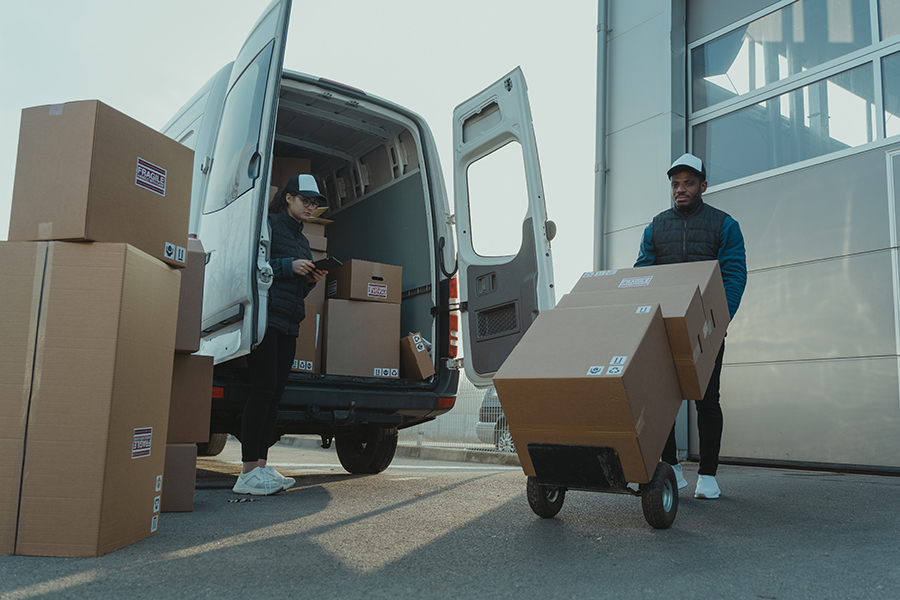
For franchisors, there is an additional consideration – franchises are specifically addressed under Category 14 of the GHG Protocol's Scope 3 framework. Its guidance covers the aggregation of Scope 1 and Scope 2 emissions from franchises, and provides approaches for estimating energy use where individual franchise locations are not separately sub-metered.
EnergyElephant helps organizations centralize and standardize the underlying energy and sustainability data needed for GHG accounting, while providing monitoring and reporting on carbon and GHG emissions. This creates a consistent source of data that teams can use to measure performance, communicate progress, and support internal and external sustainability reporting.
For retailers and franchisors trying to understand performance across a large, distributed network, bringing this information together can help move carbon management beyond periodic reporting towards ongoing measurement and action.
Track Sustainability Projects & Prove What Works
Installing LED lighting, upgrading HVAC or refrigeration, improving controls, changing operating schedules, or investing in on-site renewable energy can all require significant investment when rolled out across an entire retail network.
That makes measurement essential.
EnergyElephant centralizes and analyzes energy data across multiple locations, making it possible to compare consumption before and after efficiency projects, and understand their impact at individual sites.

The platform can also support monitoring and accounting for on-site renewable generation and energy exports, helping organizations understand the contribution of technologies such as rooftop solar.
This is particularly valuable for multi-site retailers and franchises – an initiative can be tested at selected locations, its performance measured using actual energy data, and the results used to inform a wider rollout. The result is a more evidence-based approach to sustainability investment – helping teams identify successful initiatives, demonstrate progress, and build the case for what to do next.
Tenant Data Collection by Landlords
Collecting energy and other sustainability data can be challenging in landlord–tenant arrangements, particularly where responsibility for utility bills varies or costs are allocated across multiple parties.
Tenants, including franchise operators, may also be required to report monthly, quarterly, or annually on energy use, waste, water consumption, and other sustainability metrics to their head office. Gathering and managing this information can be time-consuming, while ensuring data is accurate, complete, and traceable can become especially difficult during audits.

Creating value for both landlords and tenants is therefore essential, particularly where sustainability data has not historically been collected, maintained, or shared in a consistent way.
EnergyElephant brings utility and sustainability data together with easy-to-use collection tools, enabling performance to be viewed at site, regional, and portfolio level. This helps landlords and tenants turn large volumes of operational data into clear, actionable insights while improving transparency and simplifying reporting.
Manage energy data and sustainability data, all in one place
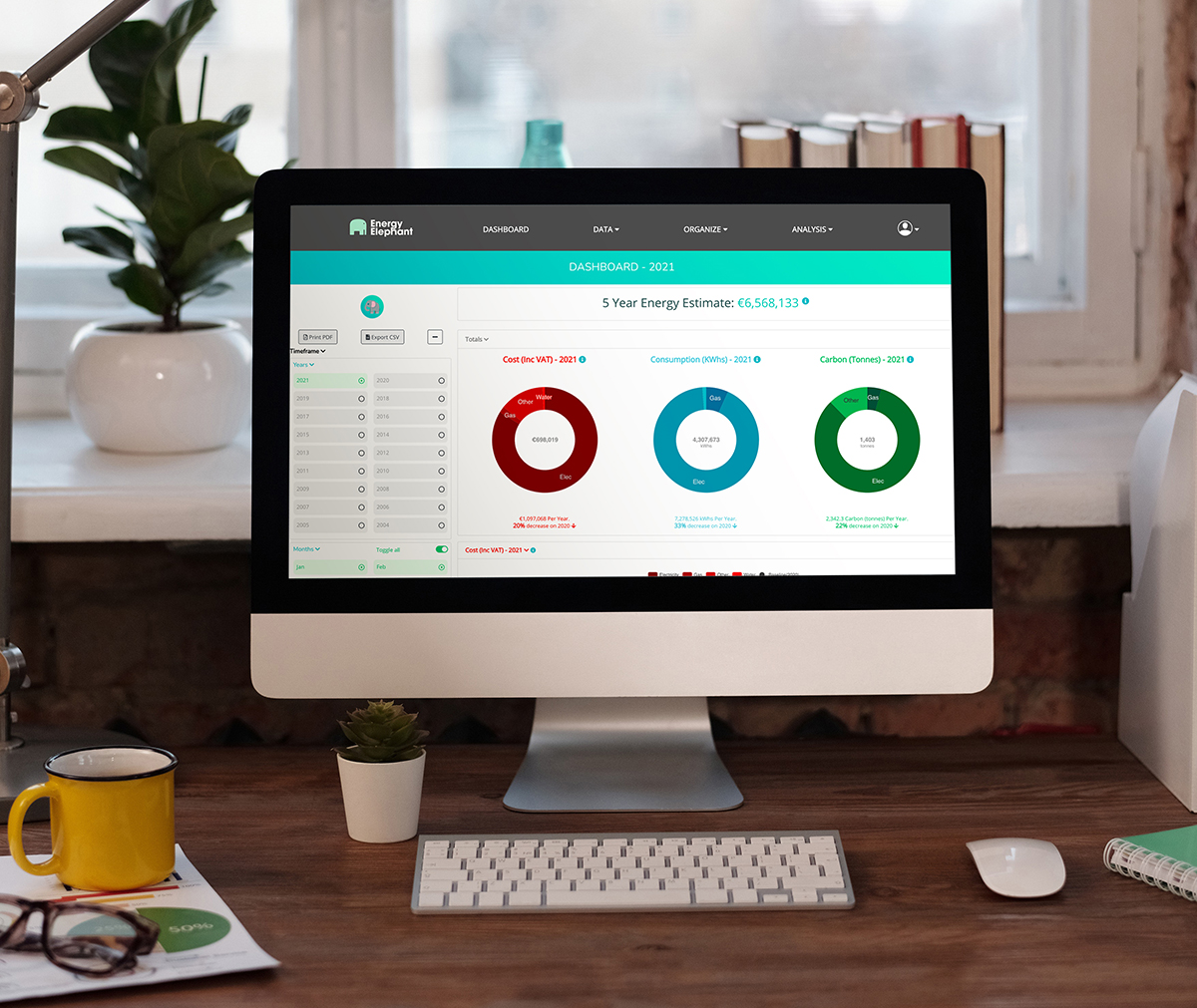
See all of your utility data for cost, usage and environmental impact in one place, with preconfigured dashboards and reports to simplify how you measure, plan, track and act.
EnergyElephant can quickly identify new efficiencies across your sites and save you time on planning projects and reporting results.
Utility bill validation and management
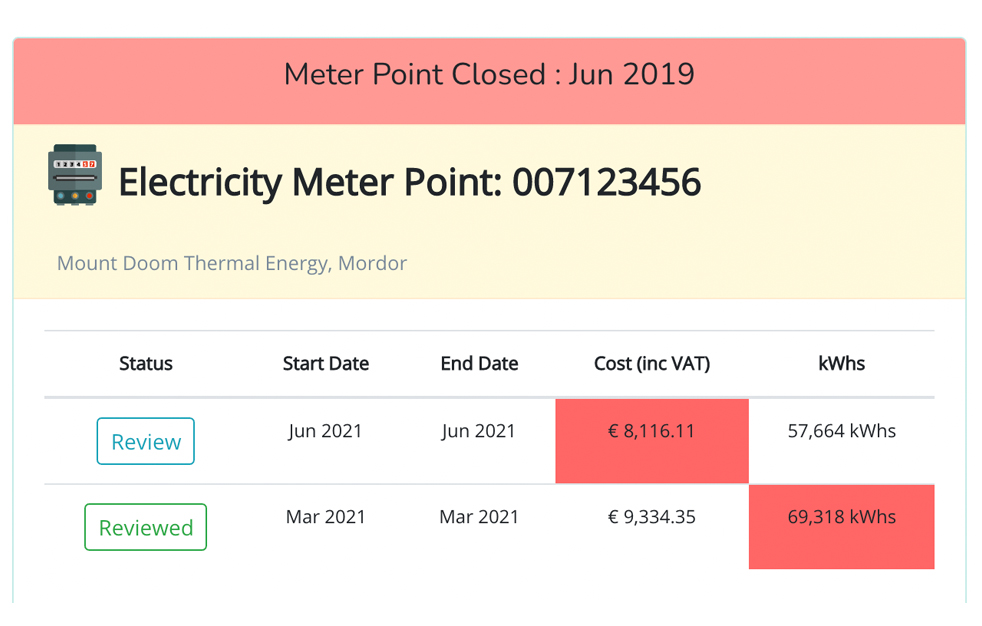
EnergyElephant can automatically retrieve bills from your supplier and store them, whilst extracting detailed data from each bill.
This simplifies bill checking and data capture so that you can focus on more important tasks and only review bills that are flagged as problematic.
You can also upload your original bills and data in bulk and they will be processed into the system in seconds.
Easy to understand and report
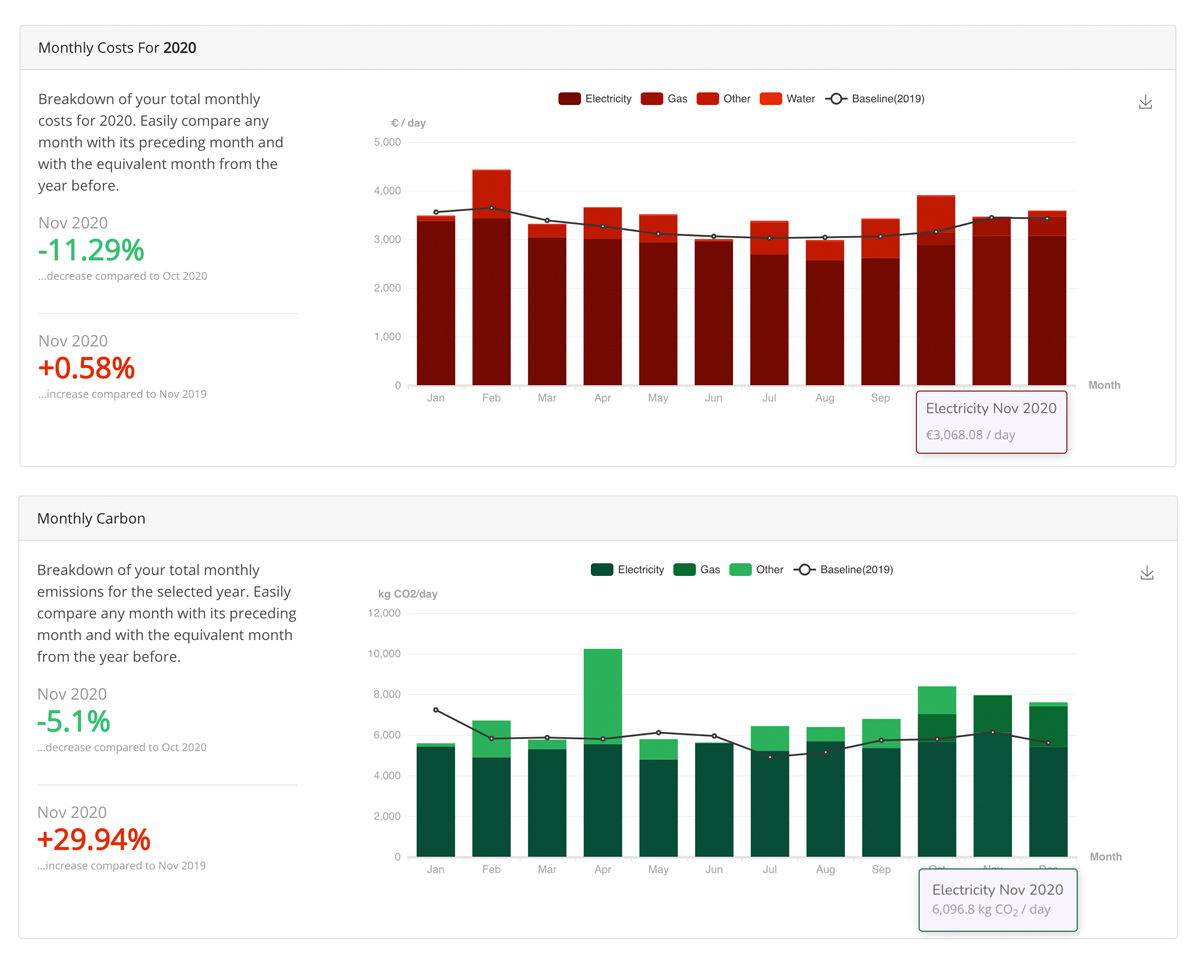
We know that sustainability reports need to be shared with people who are not experts in the area. For that reason we make sure everything in EnergyElephant is easy to understand and simple to use so that you can report and communicate effortlessly.
Share access to specific assets and views with your team or download charts and data for use in your own reports or for reporting frameworks such as Task Force for Climate Related Financial Disclosures (TCFD), Carbon Disclosure Project (CDP) and ISO 50001.
Accounting for energy from your on-site renewables
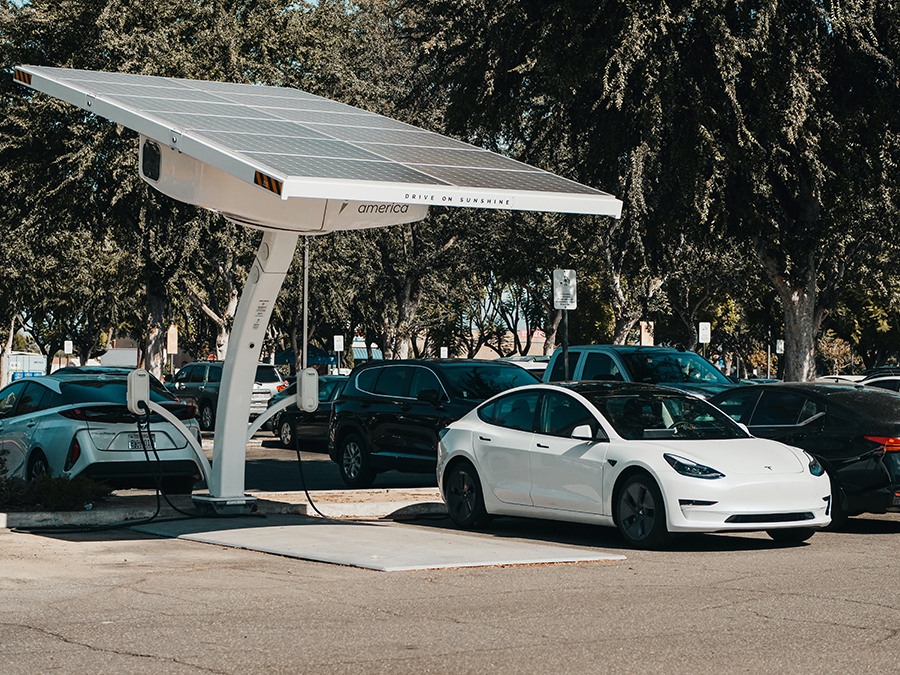
The ability of organizations to generate their own energy through solar, wind and other renewable sources is a key aspect of the net-zero transition.
EnergyElephant supports effective monitoring and accounting of energy exports via sub-metering.
Identify energy saving opportunities
EnergyElephant visualizes energy consumption to help you identify inefficiencies and respond to problematic trends.
Track energy usage out of hours, monitor start-up and shutdown times and quantify energy baseloads.
Assess performance of divisions and buildings against custom KPIs (such as production activity, staffing, floor area etc.) to clearly quantify efficiency across your organization.

Save money on energy and time for your team
EnergyElephant can keep your costs down by checking your unit rates against competitive rates in the market based on your actual usage.
Based on your consumption it can show you which energy sources are cheaper to use for your requirements.
EnergyElephant also monitors your contract discounts and highlights when its time to switch or renegotiate your contract.
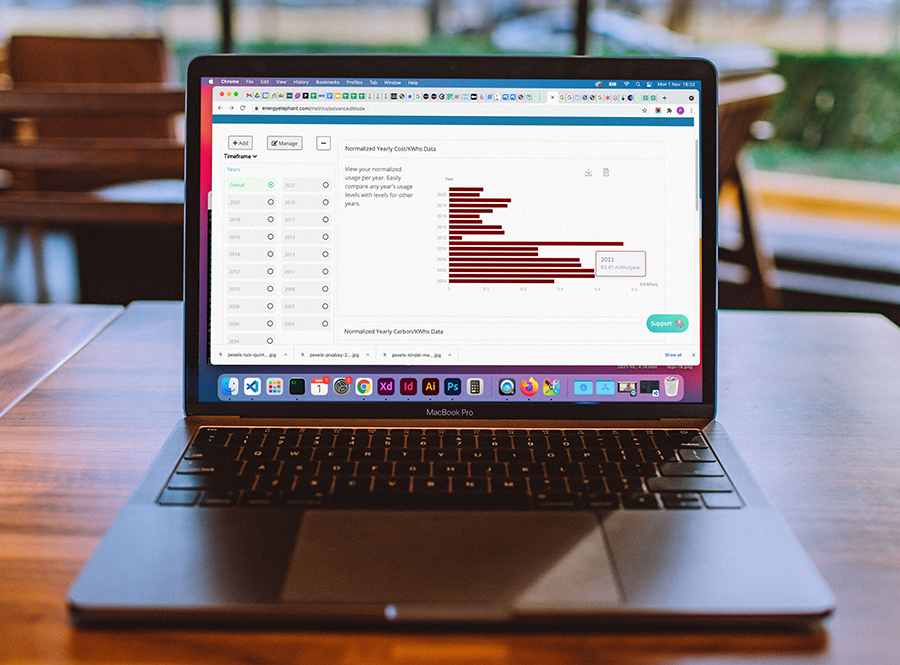
Secure and accessible data for your organization
EnergyElephant secures all of your data in custom designed cloud services, meaning you’ll always have access when you need it.
By centralising your utilities data with EnergyElephant, With EnergyElephant you can change your supplier whenever you want, safe in the knowledge your historic and future data will remain secure and accessible.

Engage Stakeholders & Sustain Momentum
Sustainability success depends on stakeholder engagement. EnergyElephant offers public-facing dashboards to educate staff and the wider public on sustainability goals, helping to foster a "Green Business" culture.
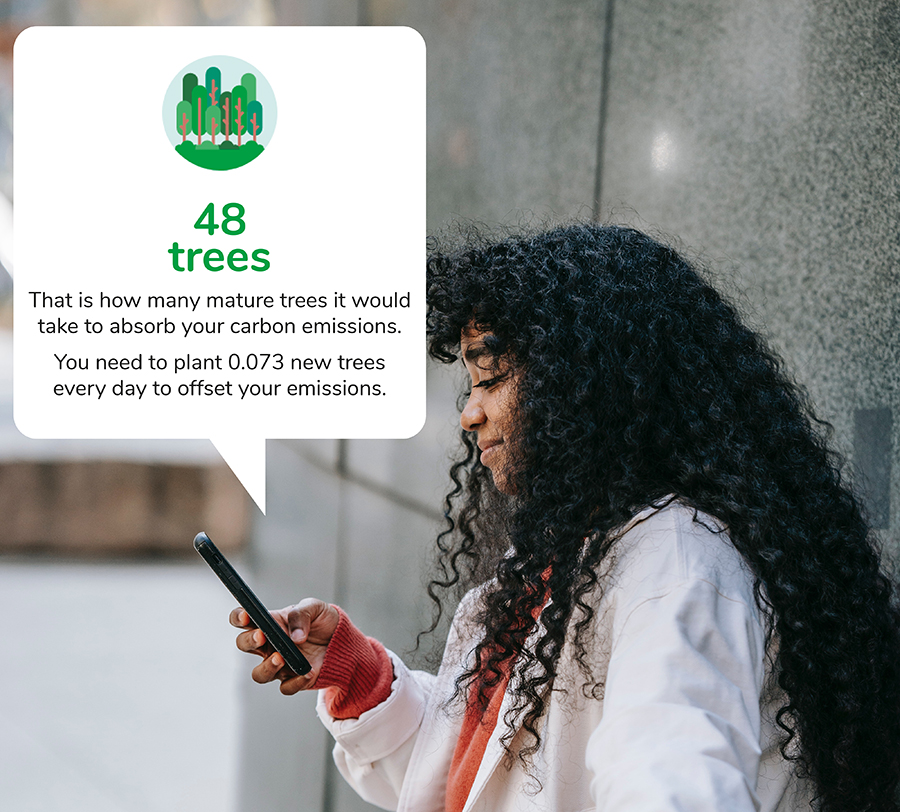
Be more sustainable
EnergyElephant visualizes your use of utilities to help you identify inefficiencies and respond to problematic trends.
Assess performance of divisions and buildings against custom KPIs (such as production activity, staffing, floor area etc.) to clearly quantify efficiency across your organization, in energy, water, waste and emissions.
Carbon price modelling
EnergyElephant enables organizations to set preferred carbon prices and see how their net-zero trajectory is affected.
This supports longer term planning for the financial costs and benefits of transitioning businesses into a cleaner, more sustainable future.

Contact us
We can help you reach your sustainability goals and achieve Net Zero. Let us know the challenges you are looking to solve and our team will be in touch.